

Seeking Truth and Repair: Remembering Our Enslaved Neighbors in Columbia
"None of us can be held responsible for the wrongdoings of our ancestors. But if today we choose not to do the right and necessary thing, that burden we own.” -Nikole Hannah-Jones
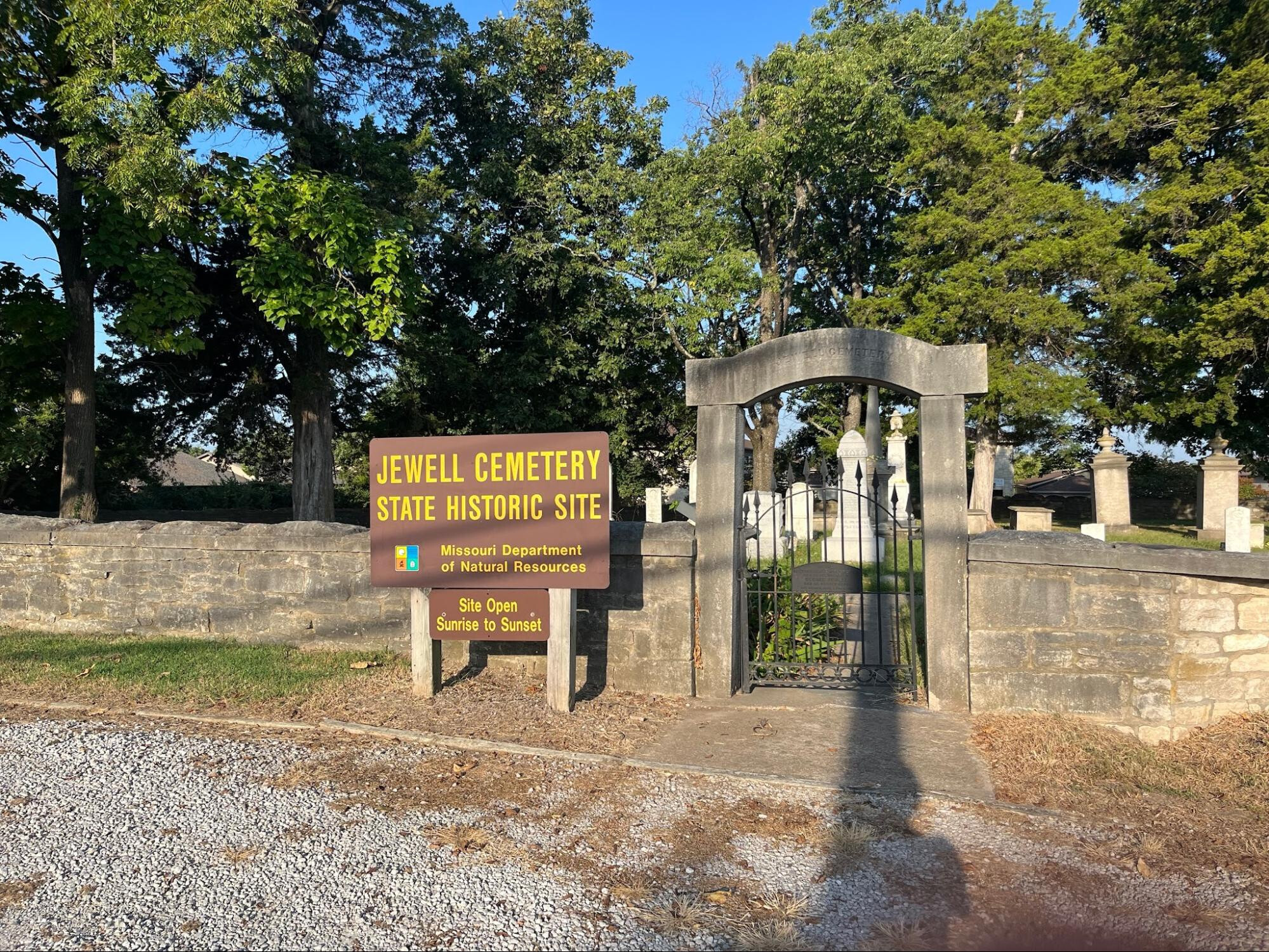
Before the area was crowded with restaurants and apartment buildings, the traffic of Providence Road whizzing past, William Jewell Cemetery was a quiet country location. With death dates on the tombstones spanning from 1822 to 1968, the little plot of land has watched the city of Columbia grow up around it.
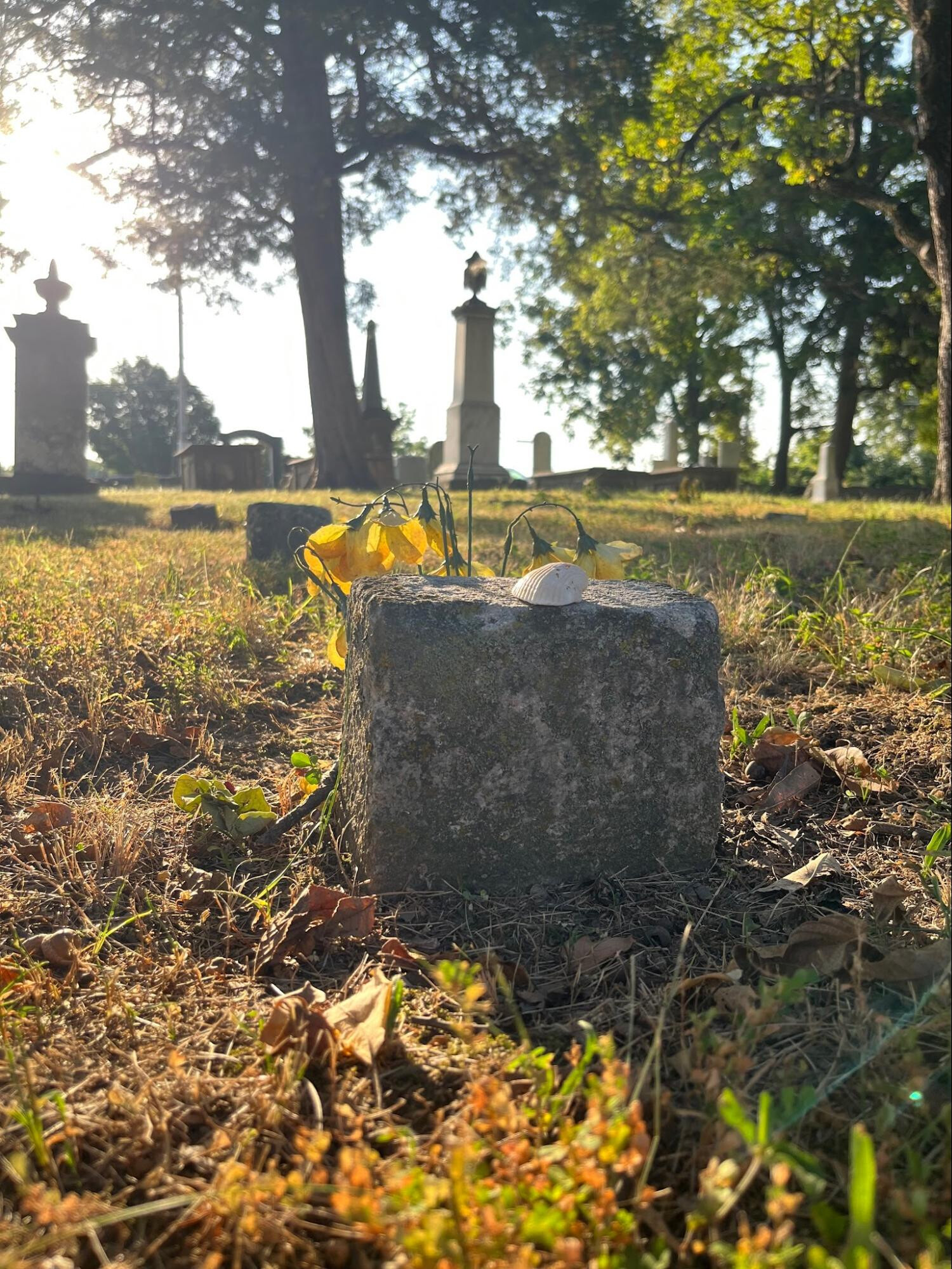
In the back of the cemetery, behind the impressive stones of William Jewell and his nephew and former Missouri Governor Charles Hardin, are about 20 small stones with no names or dates.
We invite you to pull off the main road and enter through the gate to experience this peaceful resting place, shaded by oaks, persimmons, and cedars. Because of Hardin’s internment there, the cemetery has been part of the Missouri State Park System since 1970, so all are welcome to visit.
On an overcast June morning, a group of people from First Baptist Church Columbia gather in the small cemetery. Not to laud one of their founding members, William Jewell, but to honor those under the unmarked stones - the graves of the African people who were enslaved by the Jewell family.
The commemoration in the cemetery was led by First Baptist’s Racial Justice and Inclusion (RJI) team, whose mission is “to lead the [predominately white] congregation to become better educated about racial injustice, systemic racism, and white privilege. They explore ways to take action locally toward achieving racial justice in our church and the broader community.”
One of the participants read “Confessions for Repair” by Cole Arthur Riley.
God of renewal, we confess that we have desired justice without repair.
Liberation without healing.
We have purged our stories of nuance, and exalted tragedy as the most important thing.
Other times we have demanded a rushed unity of the oppressed,
without fully contending with all the ways the union is still to their demise.
We have not offered meaningful reparations, choosing to retain wealth that never really belonged to us.
And, as for our own healing, we are terrified.
We confess that we forget who we are when we aren’t hurting.
We want more for ourselves, but something keeps pulling us back to loveless places.
Have mercy on us in our resistance, that we would pursue repair and
enter the healing we were meant for. Amen.
Many of those enslaved by Jewell and his family were also members of First Baptist. In total, 54 enslaved church members are listed in the early records of First Baptist Church, Columbia. Some of these were likely buried at Jewell Cemetery:
Emialmo, Henry, Gibbos, George, Fielding, Eneaz, Fanny, Abraham, James, Isoine, Henry, Charles, Byres, Biddy, Abraham, Jame, James, Emanuel, Elona, Fanny, James, Ellen, Ellen’s Children, David, Creasy, Chloe, Charles, Nathan, Peggy, Washington, Thomas, Tabitha, Stephen, Rojer, Robin, Ralph, Phillis, Peter, Liruinea, Lewis, Kenny, Louisa, Kary, Kenny, Joseph, John, Jane, Mary, Maria, Mandy, Malinda, Lydia, Lucina, and John.*
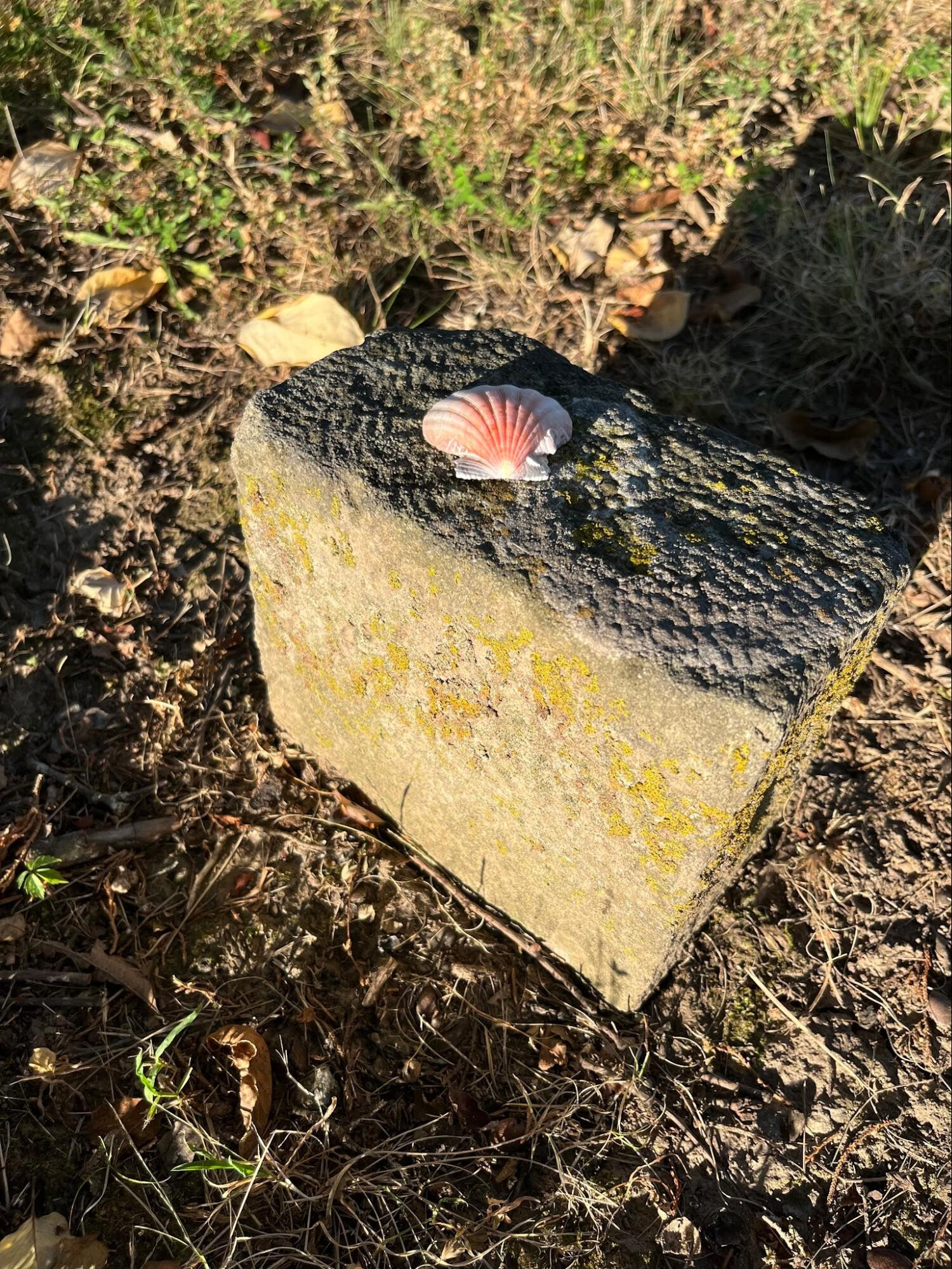
Shells were placed on each Missouri limestone grave marker. There are several ideas and traditions that explain why shells were used to decorate the graves of African Americans. The Mount Peace Cemetery Association sums several of those reasons up nicely, saying, “This was tradition for many enslaved Africans living in America to mark burials with seashells because they were the symbols of immortality and water, and a way to guide the deceased to afterlife – and thus taking them back home to Africa.”
Across Christian symbolism, the shell represents baptism, spiritual protection, and the earthly pilgrimage toward heaven. The group echoed a chorus written by RJI member Julie Walker. “We pray for justice, peace, and equality for all humanity.”
This commemoration was one step in a journey that First Baptist is on. We humbly pray as God leads us in this journey of lament resulting in action, may we be a people extending God’s heart for justice to our community. Join us in this prayer.
Litany for Addressing Racism
By Fran Pratt
Oh God, we are gradually waking up
To the knowledge of our deep and hidden sins;
Most particularly, to the sin of racism
Which has affected our culture, psyche, and practice.
We thought we could say, “Oh, those racist generations have passed on.
The civil rights movement already happened.”
We thought we had leveled the playing field.
We thought we could ignore Whiteness.
We thought we didn’t have to see color.
But we know that we have more work to do,
To cleanse, heal, and establish justice.
We quit before the work was finished.
We were wrong.
Help us to see what we couldn’t see before.
Help us to examine everything:
Every custom and system,
Every group dynamic and assumption,
To leave no stone unturned in our mission
To rout out injustice;
To take every thought captive to the loving ethic of Christ.
This work is messy.
We feel sensitive about it.
We feel overwhelmed and ashamed.
Help us not to minimize or shirk,
Nor be blinded by our privilege.
Give us robust hearts,
Willing to take an unflinching look at the racism within us.
And as we sift through our habits, culture, and customs,
Examining them with a new sensitivity to injustice,
Help us to embody hope,
Peacemaking,
Restoration,
and above all, love for our neighbors.
Make us aligned to the kin-dom of Heaven,
Diligently working for liberation. Amen.
If you would like to learn more about Anti-Racism work at First Baptist Columbia, visit our website or check out these resources we recommend for additional study.
For the most up-to-date information on RJI events and pilgrimages at First Baptist, follow us on Facebook or Instagram.
*The names of enslaved persons acknowledged and remembered today were taken from First Baptist handwritten records, William Jewell’s will, and the probate record of Charles Hardin. Some names of enslaved persons were duplicated between those sources, and duplications were removed. Our Church records for 1845-1865 are missing, so the list does not represent all enslaved people. In addition, not all
persons enslaved by members of our church would have sought church membership. Therefore, we are confident that the number of people enslaved by our members was larger than our records indicate.